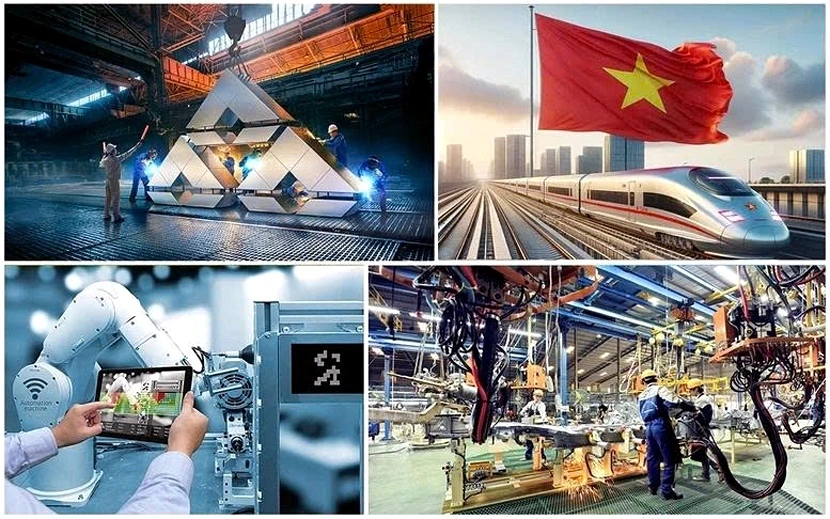
Privately-Owned Vietnamese Enterprises: Growth Engines and Challenges in Capability Upgrading
After more than three decades of renovation and integration, Vietnam has witnessed a powerful rise of the private sector. Once considered merely a “supporting” sector, private enterprises today have become one of the pillars of the economy, playing a key role in the country’s restructuring and modernization.
According to the Ministry of Planning and Investment, the private sector currently contributes around 40% of GDP, employs over 40 million people, and accounts for up to 82% of the formally employed labor force. The Vietnamese government aims to increase this contribution to 55% of GDP by 2025 and 60–65% by 2030. These figures not only reflect the economic role but also demonstrate the vitality and ambition of the Vietnamese business community in the process of industrialization.
However, behind these impressive achievements lie a series of structural challenges faced by private enterprises: high compliance costs, limited access to capital, uneven management capacity, and difficulty in integrating deeply into global value chains. These are also the issues analyzed by Mr. Csaba Bundik, CEO of CETA Consulting, in VTV’s BizLine program on Vietnam Today. His insights reflect a realistic perspective, grounded in a deep understanding of how Vietnam’s economy operates and the barriers that businesses are striving to overcome.

In the discussion, Mr. Bundik stated that Vietnamese private enterprises are “one of the main engines of the economy,” contributing more than 40% of GDP, nearly one-third of exports, and the majority of social employment. This observation aligns with the most recent reports from the OECD and the Ministry of Planning and Investment, which confirm that the private sector has become the nucleus of domestic growth. Yet, to sustain this role, Vietnam needs to continue improving its institutional frameworks, reducing administrative burdens, expanding access to capital, and enhancing enterprises’ governance capabilities.
Institutional Reform – Foundation for a Favorable Business Environment
Over recent years, Vietnam has made considerable progress in improving its investment climate. More than 3,800 business conditions have been eliminated, hundreds of administrative procedures simplified, and e-government platforms expanded. However, according to many surveys, a gap still exists between policy and implementation.
Many enterprises report that access to land, licensing, and tax compliance remain complicated, especially at the local level. A World Bank report indicates that over 55% of individual business households do not want to convert into formal enterprises due to compliance costs and overlapping inspections. This shows that reforms must shift focus from “reducing the number of procedures” to “simplifying and standardizing processes,” while enhancing transparency and consistency among regulatory agencies.
Mr. Csaba Bundik emphasized that what Vietnamese businesses need is not only incentive policies but “a predictable business environment” — one where they can focus on core capabilities instead of administrative procedures. Therefore, institutional improvement is not just an administrative issue, but also a psychological prerequisite for long-term confidence and enterprise sustainability.
Capital – From Bottleneck to Growth Lever
Access to capital remains a major constraint for the private sector. Most small and medium-sized enterprises still depend on short-term bank loans, while alternative funding channels such as corporate bonds, venture capital, or green financing remain underdeveloped.
An OECD report points out that Vietnamese SMEs struggle to access credit due to a lack of collateral and non-transparent credit histories. In the context of green transition and digitalization, the need for stable and long-term capital becomes even more urgent.
Building a multi-tier financial ecosystem is essential, including innovation funds, ESG preferential credit, and risk guarantee mechanisms for startups and green enterprises. At the same time, commercial banks should transform their evaluation models — shifting from asset-based assessments to performance and value-creation assessments.
Enhancing Governance Capabilities – The Key to International Integration
Most Vietnamese companies still operate under a family-owned model, lacking KPI systems, risk control mechanisms, and professional management teams. When participating in global supply chains, the absence of standardized processes makes it difficult for them to scale and increase added value.
From CETA Consulting’s perspective, investing in corporate governance should be viewed as a long-term strategic priority rather than a short-term cost. Enterprises should gradually professionalize their structures, establish effective monitoring systems, and apply international standards in risk, finance, and human resource management.
Mr. Bundik once remarked, “Doing business in Vietnam requires flexibility, but to go far, you need a sustainable governance system.” It is this combination of flexibility and professionalism that will help Vietnamese businesses stand firm as they expand into regional and global markets.
Green Transition and Digitalization – Two Parallel Pathways
Green transition is no longer an option but a mandatory competitive requirement. As the EU, the US, and other major markets implement carbon tax mechanisms, Vietnamese enterprises that fail to meet ESG standards will face export and investment restrictions.
A 2025 report by Vietnam Investment Review shows that over 70% of Vietnamese enterprises do not yet have a concrete ESG plan, mainly due to limited human resources and high implementation costs. This opens up significant opportunities for public–private partnerships and consulting organizations to support enterprises in developing green and digital transition strategies suited to each sector and scale.
At the same time, digital transformation helps enterprises optimize operations, reduce costs, and improve adaptability to market fluctuations. Small and medium-sized enterprises, with their agility, can seize this opportunity to apply appropriate technologies and integrate more deeply into modern supply chains.
Toward a Stage of Sustainable Development
Vietnam’s private sector is entering a new phase of development — shifting from rapid growth to sustainable and high-quality growth. To achieve this, a comprehensive support ecosystem is required, where government, financial institutions, enterprises, and consulting organizations work hand in hand.
According to CETA Consulting, the strength of the private sector lies not only in its production capacity but also in its ability to learn, innovate, and proactively integrate. As institutional frameworks improve, capital flows are unlocked, and management knowledge is strengthened, Vietnamese enterprises can move from being mere participants to becoming leaders in the regional economy.
Vietnam’s private sector stands at a crossroads of opportunity: an open economy, a young population, strong government reform commitments, and global supply chains diversifying. To seize this moment, enterprises must overcome old constraints in governance, finance, and technology. Understanding “how business is done in Vietnam” — understanding the market, the institutions, and the corporate culture — will be the key to moving from rapid growth to sustainable development.