From Cost Advantage to Capability Advantage: HCMC’s Path to Becoming an Innovation Hub
Ho Chi Minh City has set an ambitious goal: to become a leading innovation hub in ASEAN by 2030. This ambition reflects a broader shift in Vietnam’s growth model — from competing mainly on cost to competing through technology, talent, innovation, and capability.
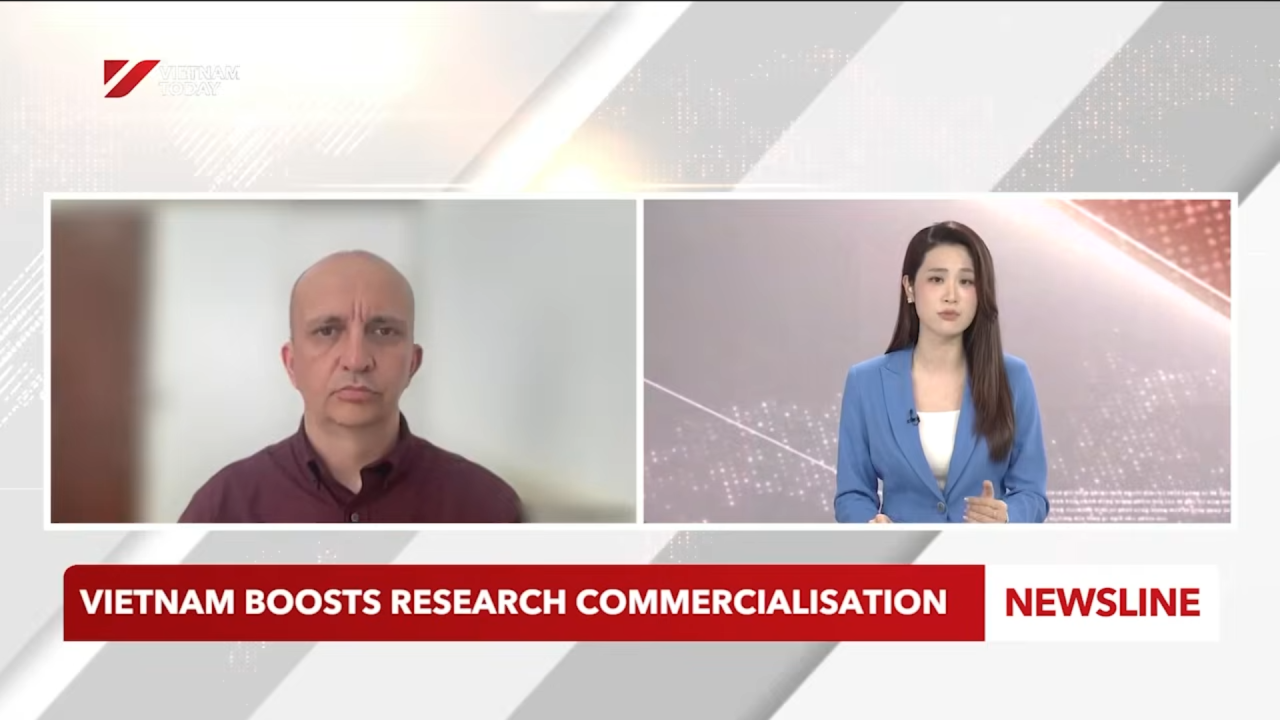
In a recent interview with VTV Vietnam Today, our CEO, Mr. Csaba Bundik, shared a key perspective: a true innovation hub is not defined by the number of ideas it generates, but by how effectively those ideas become real products, real companies, and real economic value.
HCMC already has many strong foundations: universities, research institutes, hospitals, applied industries, young talent, and a fast-growing market. However, potential alone is not enough. The real challenge is building a clear pathway from research to market.
This means creating stronger links between universities, businesses, investors, and public institutions. It also means giving founders and researchers access to what they need most: data, real users, testing environments, capital, and predictable rules.
For sectors such as AI, fintech, biotech, digital health, and education technology, the ability to test and scale solutions in real-life environments will be critical. If innovation remains only in laboratories or policy papers, its economic impact will be limited.
The proposed International Financial Centre in HCMC could also become an important bridge between innovation and capital. With the right design, it can help start-ups and technology companies access venture funding, growth investment, professional services, and regional expansion opportunities.
Ultimately, HCMC’s success will not be measured only by how many start-ups are created. It will be measured by whether talent chooses to stay, whether companies can scale, and whether research can become globally competitive products and services.
If HCMC gets this right, Vietnam will send a strong signal to the world: it is no longer only an efficient production destination, but an emerging hub for innovation, technology, and regional growth.
Watch the full interview with Mr. Csaba Bundik on VTV Vietnam Today to explore more insights on HCMC’s innovation future: https://youtu.be/IUWIwP7WTGo?si=xUPi5M7iX_278Ijf